Building confidence in the gym

Updated: Oct 12

By Luke Hayter | Rewrite Your Age by Elevate | Article 5 of 6
Building confidence in the gym can begin before you lift a single weight. Knowing where to go, what to do and who to ask makes the first visit much less of a guessing game.
If you're a woman over 50 and haven't spent much time in a gym, the unfamiliar equipment can make you feel as though everyone else knows something you don't. Even choosing a machine can become a decision you'd rather avoid.
You have every right to be there. You are allowed to learn, ask questions and take your time.
Make the first visit easier to arrange
Contact the gym before you turn up. Explain that you're new or returning after a break and would like someone to show you around.
Ask when it tends to be quieter, whether an induction is available and who can help you learn the equipment. Check the practical things too: parking, changing facilities and what you need to bring.
If you have mobility needs or find certain spaces difficult to use, mention that before the visit. A useful conversation now can save an awkward experience later.
You can also visit simply to look around. There is no need to make your first time through the door a full workout as well.
Arrive with a short plan
Wandering around wondering what to use next can make a nervous visit feel much longer. A short written programme gives you something specific to follow.
For your first few sessions, ask your coach to choose a small number of exercises and show you each one. Record the seat setting, the resistance and how many repetitions to do. A photo of the machine can help you recognise it next time, provided the gym permits it and you avoid photographing other people.
Your notes might be as simple as: warm up, leg exercise, row, chest press, then finish. The coach should decide which versions suit you.
Familiar exercises give you a chance to practise. Changing the whole programme every visit means constantly learning something new when you're still trying to settle in.
Ask the questions you actually need answered
You don't have to pretend that a demonstration made sense if it didn't. Ask the coach to explain it again or watch you try.
Useful questions include:
Can you show me how to adjust this for my height?
Where should I expect to feel the exercise working?
How will I know if the weight is suitable?
What should I do if this machine is being used?
Can you watch a few repetitions and check my position?
A good explanation should leave you clearer about what to do. You should feel comfortable saying that something hurts, feels unstable or simply doesn't make sense yet.
If a movement causes sharp pain or a new symptom, stop and ask for help. Feeling pressured to carry on is not something you need to accept from a coach.
Choose equipment you feel comfortable learning
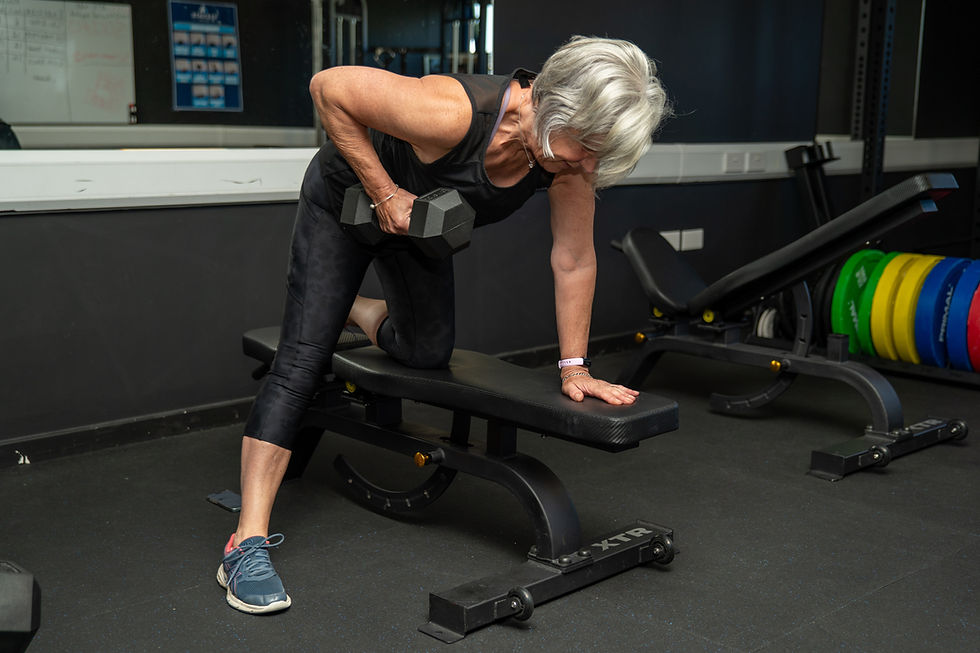
Machines, dumbbells, resistance bands and body-weight exercises can all form part of useful strength training. The ACSM's 2026 guidance recognises several effective approaches, so there is no requirement to begin with a barbell. [1]
Some people like the support and clear setup of a machine. Others prefer a couple of dumbbells in a quieter space. Start with equipment that suits your ability and lets you practise confidently.
You can learn more later. Using the same few machines well is a reasonable first step, especially if it helps you attend regularly.
Give yourself a way to handle awkward moments
A machine will occasionally be occupied. You might forget how something adjusts. You may need an extra rest. Plan for those ordinary situations rather than treating them as evidence that the gym isn't for you.
Ask your coach for an alternative to each main exercise. Keep your programme on your phone or a small card. Know where a member of staff is usually based.
It is fine to say, 'I'm learning this one. Could you show me again?' People who have trained for years still ask for advice.
You don't need to compare your weight stack or pace with the person next to you. You don't know their experience, goals or circumstances. Your programme should give you a way to judge your own progress.
Choose the support that helps you turn up
A friend can make the first visits easier, provided you both feel free to work at your own level. A small coached group can give you a regular appointment and someone to guide the session. One-to-one coaching offers more individual attention.
Ask how exercises are adapted and how much help is available. Feeling welcome is useful; understanding your programme matters as well.
For your next visit, set one manageable aim. That could be completing your induction, learning three machines or following your short programme without needing to guess what comes next. Confidence can grow through those repeated experiences.
If you would like to see how we coach before deciding what is right for you, get in touch. Tell us what worries you about the gym and what you'd like to achieve. We'll explain the options for training with us in Bridport.


Comments